

How we prevented a loss of 36 million due to hail: the real case that proves prevention is no longer optional
We prevented hail losses in a scenario where more than 120 million euros were at risk. It is not a promise, it is a real case that demonstrates how a storm can go from being a multi-million threat to a non-impact event when action is taken in time.
Hail does not warn… but it can be anticipated
Every year we see it. Every season confirms it.
Hail is no longer an occasional risk, it is a recurring threat that can destroy millions in a matter of minutes. Anticipating to avoid hail losses must be part of the agenda of any producer or company that has exposed assets.
And we are not talking about theory.
We are talking about a real case.
One that occurred on October 10, 2025 in Piracicaba (Brazil), and that today (right before the storm season in Europe) has become a clear warning for any company with exposed assets.
Because what was at stake was not minor:
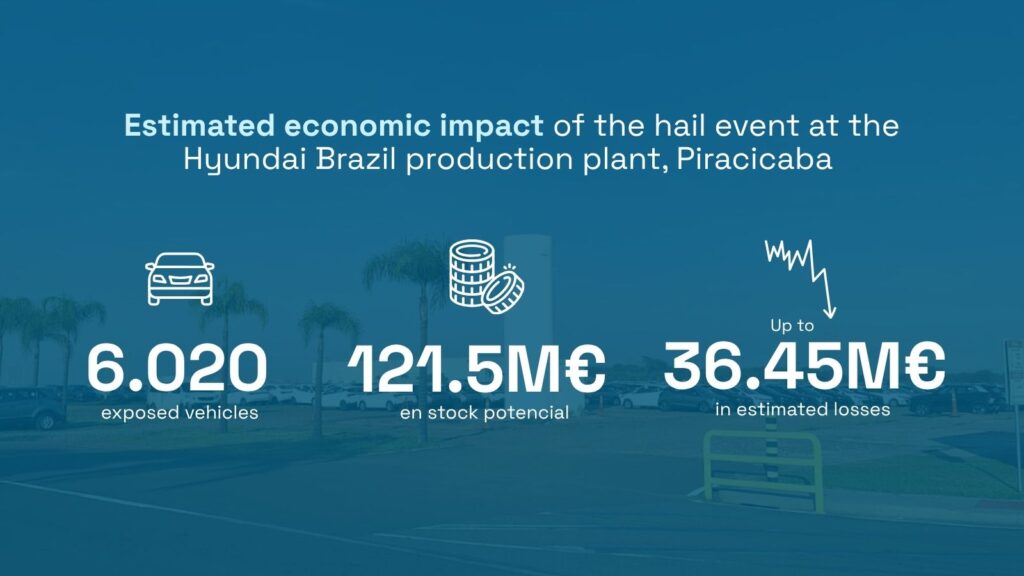
- More than 6,000 vehicles outdoors
- A value exceeding 120 million euros
- A loss scenario that could reach 36 million euros
And yet, there was no damage.
What happened during the storm: hail, impact… and an unexpected result.
That afternoon, a severe storm formed over the state of São Paulo.
Heat, humidity, atmospheric instability, electrical activity… and hail. The phenomenon affected more than twenty municipalities and caused visible damage in multiple urban areas near the Hyundai plant in Piracicaba.
But within the protected area, something happened that completely changes the way this risk is understood:
👉 The hail fell… but it caused no damage.
While in nearby neighborhoods impacts were recorded on infrastructure and vehicles, in the protected area the assets remained intact.
It was not luck. It was foresight.
How we protected more than 120 million euros with less than 1% investment
The difference was in the decision made before the storm.
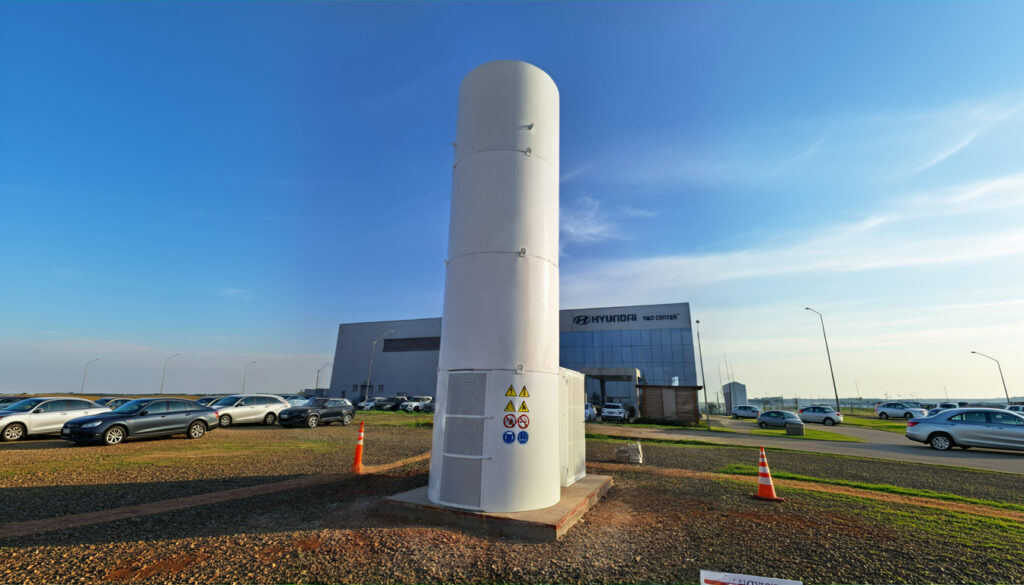
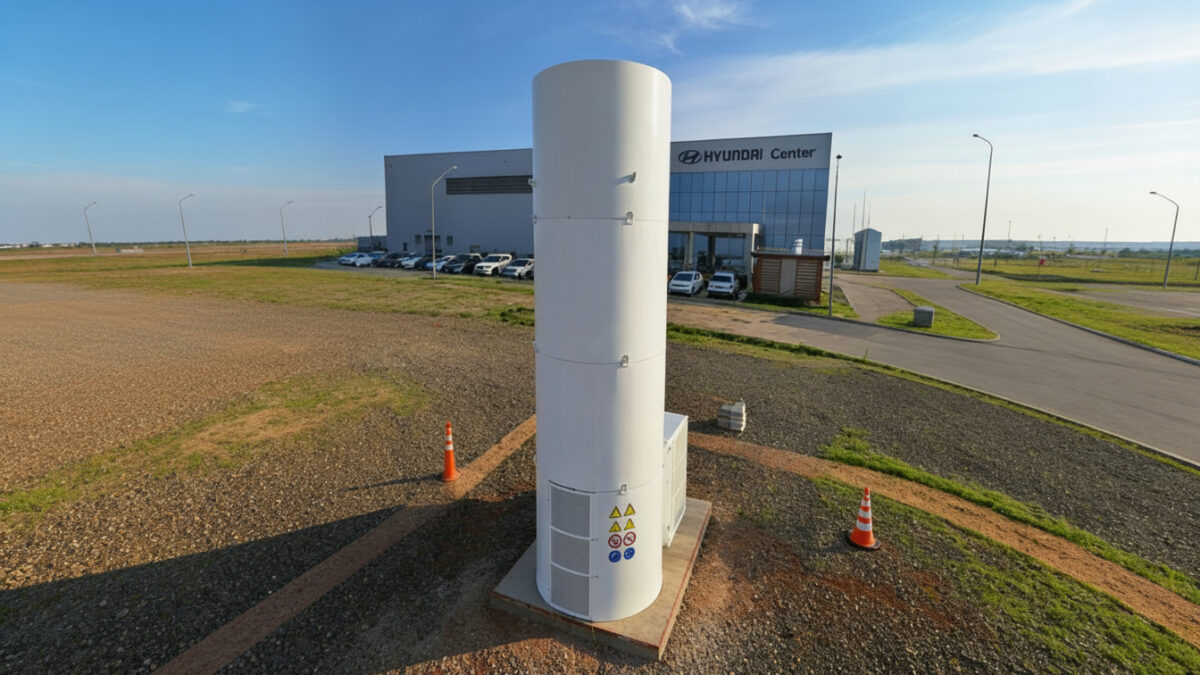
In this case, three soundproofed hail protection systems were installed, working in a coordinated manner to cover the critical area.
The investment was clear:
Just over €200,000
Less than 3% of the total potential damage value
The result was even clearer:
👉 €0 in hail damage
When the potential impact could have exceeded 36 million.
How hail protection really works (without chemicals and without altering rainfall)